
Email Email    Print Print

Max From NBC’s ‘Parenthood’ Talks Asperger’s

By

Text Size  A  A

When NBC’s “Parenthood” premiered in March, viewers quickly learned that 8-year-old Max Braverman has Asperger’s syndrome. Since then, autism has emerged as a central part of nearly every episode of the drama, which focuses on the experiences of three generations of a California family.
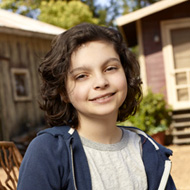
Max Burkholder plays Max Braverman on NBC's "Parenthood."

Max Burkholder plays Max Braverman on NBC's "Parenthood." (Mitchell Haaseth/NBC)

The Asperger’s storyline follows the family’s journey to accept Max’s diagnosis and help him progress, all while dealing with their own emotions. The show’s heavy focus on life with a developmental disability is believed to be a first and so far audiences both with and without ties to autism seem to be responding.

“While not all parents are dealing with autism or Asperger’s, what I do find is all parents are dealing with something with their kids,” says Jason Katims, the show’s creator who himself has a son on the autism spectrum.

At the heart of the “Parenthood” drama is actor Max Burkholder, 13, in the role of Max Braverman. Nearly halfway through the show’s second season, Burkholder opens up to Disability Scoop about what it’s like to play a character with Asperger’s.

Disability Scoop: How did you land the role of Max on “Parenthood”?

Max Burkholder: I went in to audition and I really liked it a lot, so I was hoping that I would get called back. I had no idea what autism was before so I wanted to be able to learn more. It’s hard sometimes thinking of stuff that a person with autism might do in any given situation, but it’s still really fun.

Disability Scoop: What’s it like to play a character with Asperger’s syndrome?

Max Burkholder: It’s quite a bit harder because I have to figure out a way of expressing what Max is feeling without making it seem that he doesn’t have Asperger’s.

Disability Scoop: What goes through your mind to get into character?

Max Burkholder: I just think what Max might be feeling. He has special interests, like he loves bugs, anything about bugs. So whenever there’s something about bugs I try to seem really interested. But he doesn’t like to be touched so I make myself think that if this person touches me, it’s going to hurt a lot.

Disability Scoop: How do you make sure that your portrayal is realistic?

Max Burkholder: Every couple of episodes I get together with an Asperger’s doctor, the director and the executive producer and we talk about what Max might do in the given situations in the script. I get new ideas about what to do during the scenes — how he would act, what he would say — because a lot of ad libbing happens on the show. As I do more and more, I start to understand more about what Max might be feeling.

Disability Scoop: What have you learned about autism since taking on the role?

Max Burkholder: It’s different for every person, but it’s really just being a little more sensitive than you normally would be to things like sight, sound and touch and they can’t really understand facial expressions and social cues.

Disability Scoop: In real life, are you anything like the character you play?

Max Burkholder: I tend to obsess over things as well. I obsess over video games. In that way, I’m kind of like Max. Another big similarity is I don’t like my food to touch. Some big differences are I don’t mind being touched and I can change the topic of my conversation and I can read expressions.

Disability Scoop: What’s the most challenging scene you’ve had to do on this show?

Max Burkholder: At one point I had a hissing cockroach right in front of me during a scene where I was eating and I just had so much trouble keeping it down. It was not a fun day.

Disability Scoop: Have you gotten any feedback about your portrayal of Max?

Max Burkholder: I recently got a letter from a girl who has Asperger’s and she thought that I was doing well and I was really excited. It’s pretty touching when someone who actually has the syndrome thinks I’m doing a good job at portraying it.

Disability Scoop: Do you know what comes next for Max or is there anything you’d like to see him do?

Max Burkholder: We usually get the script only a few days before we film, so I don’t know what’s coming next. If I had to guess, I’d probably say he gets better. I’d like to see him conquer some of the harder things that people with Asperger’s go through like not being able to read social cues.

More in Living »

Post a Comment

Comments are moderated and will not appear until they are approved. All comments must be in compliance with the DisabilityScoop.com Terms and Conditions. Please stay on-topic, keep your comments brief and refrain from inserting links or using abusive language.


Comments (21 Responses)

  1. autti34 says:

    hi it great there showi ng someone with as it will help alot i have hfa it not the same as aspgers but were close some will think this is the first tv show with a reg chacter with autism but it notr when i was a teen there was a show call st eleswere one of the dr had a boy with severe autism that was in the 80s when autism was conderie rare

  2. audreylueth says:

    I believe the first television show that has a major focus on developmental disabilities was Life Goes On, in which the brother who had Down syndrome actually had Down syndrome. Many of the episodes revolved around some of the challenges Corky faced and the real-life experiences many young adults with developmental disabilities encounter. Though I love Parenthood, I feel that some of the Asperger’s characteristics get a little overplayed. As a high school intervention specialist, I have worked with several students who deal with this challenge every day, but most days are a little more typical than atypical.

  3. dlmgraham says:

    I love Parenthood. I am a parent of a special needs 7 year old and a special educator. On more than one occasion, I found myself tearing up because I can relate to what the mom is going through. So often special needs parents feel isolated. It’s great to see that the emotions, trials and tribulations my family goes through are common enough to be portrayed in a TV show. Great job!!

  4. katiedidkorner says:

    I really appreciate Max taking this seriously. I love this show because my son is 6 and was just diagnosed, and watching this made it clear to me that we needed to have him evaluated. Max Braverman showed the exact signs, (his frustrations, his OCD tenancies, his inability to be flexible with his schedule, his inattentive, or super focused issues, ect) that my son did. I cry when I watch it, because I identify so much. I started watching because of Lauren Grahm (I’m a huge Gilmore Girls fan) but continued because the story continued with Max’s diagnosis and how the family handles it. It is a comforting feeling knowing the rest of the world is watching what I am going through myself, and even if they don’t know me personally, they are thinking, “Someone real is dealing with this, and it must suck.”

  5. jsperky says:

    most days with a child with autism are anything but typical!! they are wonderful amazing children who have a huge burden on them, which in turn, controls everything around them! They struggle, their families struggle, people can be less than understanding, it is a hard hard life!

  6. Erjasmom says:

    Hi, I am the parent of an 11 year old Aspie. The scene in the grocery store could have been a page out of my life. My son counts every item on the belt at the grocery store and will freak out if I try to go on the line with just one too many items or if the person ahaead of us has done so. Many times I have wanted to lash out as Max’s father did. It’s hard to live with the constant scrutiny of other parents. You know you are doing the best for your child, but others judge and think you are a bad parent. I would very much disagree with autti34 because every Aspie child is different. My son rages, but we have 3 friends who have Aspies who do not rage. Every child is different. Every child with Asperger’s will have moments when they are typical and moments when they are not. It’s all about the pre-cursors to their behavior and the ability they have to self-regulate. When my son can receive the sensory input that he needs to self-regulate and when he uses the strategies his psychologist placed in his imaginary “tool box”, he is typical. But, when he cannot use these strategies, he’s almost like the hulk…he loses control in an instant and it’s not his fault. We must do better for our children. We must educate the public about Asperger’s and we must have interventions and psychologists who are trained to provide these interventions…that is the only way we can help our kids! :) Thank you Max for educating the public and for making my son’s life come to life on tv! :)

  7. Erjasmom says:

    I’m sorry I mis-typed the name of the person who I disagree with…autti34, right on! :) It is audreylueth who I disagree with…the Asperger’s characteristics do NOT get overplayed. Every child is different. This is why it’s so important to have shows like Parenthood on TV. Some Aspies would not mind that there are too many items on the grocery belt, but others would…yet all of these children do, in fact has Asperger’s. It manifests differently in every person and that is exactly what the neuro-typical public needs to understand. The character of Max is just one example of Asperger’s. In my son’s case, he has done every single thing that Max’s character has done, and my husband and I have had almost every single emotion, reaction and experience that has been portrayed on the show. Every child is unique! Thank you Parenthood! Thank you Max! :)

  8. bobsuvak says:

    While I don’t watch the show, I have had the opportunity after being diagnosed late in life with Aspergers Syndrome and to look back on my life and my development over the years. Actually I don’t think there is really a difference between autism and Aspergers … more a matter of the severity of the impact.

    Sometimes too much focus is put on “special interests” and “reading social cues”. While I couldn’t stand to be hugged, it wasn’t that it hurt, but rather that it caused me to feel like I was being smothered, the same way I feel in a crowded room, street or subway car.

    As a child, I actually hid from people (mostly figuratively and usually not literally) so that I wouldn’t be noticed or called upon in class … a protective instinct for self preservation I think. I must admit that I really didn’t follow what was being said unless it was something that I found interesting. But I also managed to sidestep a lot of the bullying that seems to go with the autism territory (or maybe I just didn’t notice it, I don’t know).

    But a natural progression over time is that we tend to develop coping mechanisms (even without knowing it) to help us deal with some of the problem areas (inattentiveness, hyper-focus, compulsion, not noticing or interpreting people well, not being able to let people know how we feel – reverse social cue reading).

    Sometime during my later years in high school and into college, I managed to make myself say and do things that I normally was reluctant to do (joining a fraternity, speaking in class, taking leadership roles, etc). Now I’ve been told that I was lucky to be pretty high functioning (rose to middle level management), but a lot of the problems are still there that I need to deal with.

    There needs to be a balance between hopelessness that families feel and the advances that are possible (to varying degrees). Not all of us were geeks on the outside and a lot work hard to be accepted (or at least not made fun of) even if acceptance isn’t high on our list of needs. The “Maslow’s hierarchy of needs” is kind of turned on its head in autism … we seem to have a different priority in our needs.

    Well, I guess I rambled on enough for now (actually it’s an Aspergers tendency) and I’m not sure of my point except to hope that progression can be shown, but also that the underlying problems dealing with society still are there at the same time.

    Good luck to the show and especially to those of us that have our problems or traits and to our parents who must struggle to protect their kids (and worry about how they will be later in life).

  9. Idreamea says:

    I love that the world is being exposed to people who experience disability via family friendly media, and Parenthood is a great show. I’d like to see more of a focus on the positive attributes of people who have Autism Spectrum disorders. The diagnosis is not a death sentence, and needn’t be feared. My younger brother has Autism, and I am a professional who serves and supports people with various disabilities. Disability is natural and beautiful in so many ways.

  10. PhilS32767 says:

    Question for Max Burkholder, and his team producing the show: why not spend time with Aspie kids his age, and Aspie kids the age Max Braverman is supposed to be, to learn even more of the nuances of how to portray an Aspie character?
    There’s a real range in how Aspergerian characteristics are portrayed in drama. Films like “Adam” and “My Name Is Khan” go heavy on a multiplicity of symptoms and differences — easily recognizable, but no individual in real life has *all* of those characteristics. Films like “If You Could Say It In Words” or “Smoke Signals” (one of whose protagonists, Thomas Builds-the-Fire, is almost certainly one of us) go the other route — the characteristics are there, but they’re there much more subtly, and in the presence of apparently contradictory characteristics. The reality is that almost all people on the spectrum have *some* characteristics about them that are nominally non-autistic.
    Another thing that would be great for the script, would be for Max and his family to meet *adults* on the spectrum — to understand, and to help audiences understand, what issues and struggles (and triumphs!) come to the fore later in life.
    And another thing: one of the best reactions I’ve heard to “Adam” came from Ari Ne’eman. Ari pointed out that in films like “Adam”, the autistic character is the *only* autistic character. There’s no interaction with other fellow-travelers, no sense of what autistic *community* is all about. (A great read on the topic is “Being Autistic Together”, the paper Jim Sinclair contributed to the January 2010 special issue of Disability Studies Quarterly devoted to autism.)

  11. sandeegc says:

    i find the show fasinating and very true to life. i am only very loosely connected to people with disabilities.
    i am a professional organizer and have many ADD patients referred to me.
    i was wondering if it was intentional that Sarah and Ambers speech patterns are similar to max’s on a much lesser degree, and that crosby’s OCD, with parents that enable him, also show signs of dysfunctional behavior. i am very interested in these behavior patterns, and if i was many years younger, I would probably have been in this professional field.

  12. felicialr says:

    I love the show. Max is doing a great job. He’s not only entertaing but he’s educating people & normalizing ASD. Just like there is a range of neurotypicals, there is a range of those on the spectrum. So although Max does not, in fact it would be impossible, portray everyone on the specrum, his acting is quite credible. Thank you to the producers.

  13. AKAspie says:

    I much prefer the treatment of Abed, in the show community, where it was suggested in the first episode, confirmed and addressed in the second attitude (Abed uses a film class project to show his dad how he saw life growing up with parents who thought he needed to ‘stop being weird’, with him the silent POV as stand-ins for his parents argued, right in front of him, how to interact with him; only paying for college classes that related to normal, career-specific skills like accounting, and not his silly obsession with film. Abed at one point says “TV has logic and rules. Real life doesn’t”. The film ends and Abed’s father understands a slice of life through his son’s eyes, and declares “My son is different. This helps him be understood” and pays for Abed’s eclectic film pursuits thereafter, and lets Abed move out of the house into a dorm room.). that was a wonderful episode, and I admit I tear up and say ‘AW!’ every time, but what makes this series’ portrayal of the Aspie character so great is that it is never specifically discussed in length again, though the study group will sometimes try to tell him ‘to be a little less Abed’, with good intentions of helping him socially, only for Abed to experiment and decide ‘why would I want to be someone other than myself?’ This includes hilarity such as Abed referring to situations the group is in as types of tv tropes and suggest ludicrous courses of action based on that assumption (When the group thinks a fight is too cataclysmic to stay friends after, when everyone else says ‘what to we do now?’, Abed says ‘We do what we always do: we storm out and say the study group is over’, then walks out saying ‘see you guys tomorrow!’. That as the show grew, the ‘normal’ members of the group declare ‘we can’t let him change! He’s Abed, and he’s awesome at it’…even if it means they all play along with a Christmas-fantasy where Abed describes a study-group starring, claymation, made-for-tv Save Christmas special episode to help him deal with the fact that his mother has a new family and isn’t coming for Christmas. While I respect a show like ‘Parenthood’ for dealing continuously with possible realities of raising a child with Aspergers, I prefer it when what’s the character and what’s the disability motivating an action, reaction, interactions or personality itself as manifested in each episode by the actor is not at all addressed. I think every Aspie has wanted to get a remote-controlled neon sign that would say “IT’S NOT MY AUTISM, IT”S JUST ME” to a parent, teacher, or psychiatrist at multiple times throughout their life…I know I have, that’s why I started writing. Community says ‘Hey he’s not weird, he’s Abed and he’s happy? Yeah, he has a disability; what’s that got to do with anything? I highly recommend it to anyone with Aspergers or Autism, parents/friends of the aforementioned, or anyone looking for an awesome show!

  14. knockoutdropper says:

    I think Max Burkholder does an excellent job in his role as a kid with Asperger’s Syndrome; in fact before I read this interview I was thinking that he actually did have Asperger’s Syndrome. I only started watching this show a few weeks ago and it was primarily because someone told me about the Asperger’s storyline. Although I’ve found I actually enjoy most of aspects of it, I am particularly impressed with the show’s portrayal of Asperger’s Syndrome, and the way it illustrates so many of the less dramatic issues involved.
    I laughed so hard when I watched the episode where the dad had previously committed to get ice cream but now wants to practice baseball, and Max is all “BUT YOU SAID we would get ice cream!” I think to this day the phrase “BUT YOU SAID…!!” can give my mother an instant headache…

  15. dj says:

    hi everyone, I randomly came on this page because i wanted to know more about the kid that plays max braverman, he does such a great job, I started to wonder if perhaps he does have aspergers in real life but turns out hes just a really great actor. I am now crying because of all the comments i have just read. I have just started my training to be a nurse and it is reading comments like these and finding out what sort of struggles people go through every day that make me glad of the choice i made to want to become a nurse and i hope i will get to make a positive difference even if it will be in just one person’s life :)

  16. Mary MacDougall says:

    Actually, the program “Life Goes On” several years ago (I don’t remember the decade!) portrayed a young man named “Corky” who had Down Syndrome. Even further back in the late 70′s/early 80″s St Elsewhere, a show about a teaching hospital in Boston, MA, had a “single dad” MD with a “typically developing” daughter and a son with Autism. Does anyone remember any others out there? As a speech language pathologist, although I have no children of my own (actually I have “hundreds” & their families, whom I have worked with!) I like to see these real life situations portrayed on the “tube”. I wonder how families with these real challenges relate to the such programs—does it seem realistic? I think you need individuals with disabilities, their parents & siblings to be involved as advisors to get a realistic & honest portrayal. Kudos to those who want to take the leap & depict real life!

    PS as the wife of a retired Army Officer I am often irritated by the portrayal of military families & issues…I have to wonder about the quality of advisement producers get for “military” shows…I will not watch “Army Wives”….it really annoys me!

  17. Teresa Daniel says:

    I love Max. He is so much like my son. A great memory. And when you promise him something you have to follow through. No matter how big or small. He loves computers and video games. Oh, and he loves legos. This show is fantastic. I see the worry in the parents face.Great story!

  18. Shelly says:

    It’s weird because Max even looks like my son who was diagnosed with PDD-NOS (but I really think they will change it to aspergers). I had to see if Max really did have aspergers! I could really relate to the hospital scene where Max didn’t want to be there and he said some things that people would consider rude. I could just see my son doing that, as things like that have happened in the past. Terrific show!

  19. holly homan says:

    as someone who has worked extensively with students who have Asperger Syndrome, I can assure you they don’t “conquer” reading social cues. They can learn to read them to a degree, but it never comes “natural” the way it does for those who don’t have autism. I have not watched the show, but I was rather disappointed they didn’t use someone who really was Aspegers. This young actor appears to be a very intelligent, well-spoken young man. He also is sensitive to portraying those with a disability as realistically as he can. I commend him for that. So many shows just write their scripts without knowing anything about the topic.

  20. Joanne says:

    I have a granddaughter with asperger. I am amazed of how well this character is portrayed . I had to check on line to see if he actually has aspergers or not. Thanks for the great acting as it helps for people to know what someone with aspergers is going through.

  21. Carol says:

    Hello Max
    Thank you for the great job you do playing the role of Max on Parenthood. Your portrayol of Max helps others to develop a better unserstanding of what it can be like to have autism. Very nice work.

Copyright © 2008-2012 Disability Scoop, LLC. All Rights Reserved. | Privacy Policy | Terms and Conditions | Reprints and Permissions